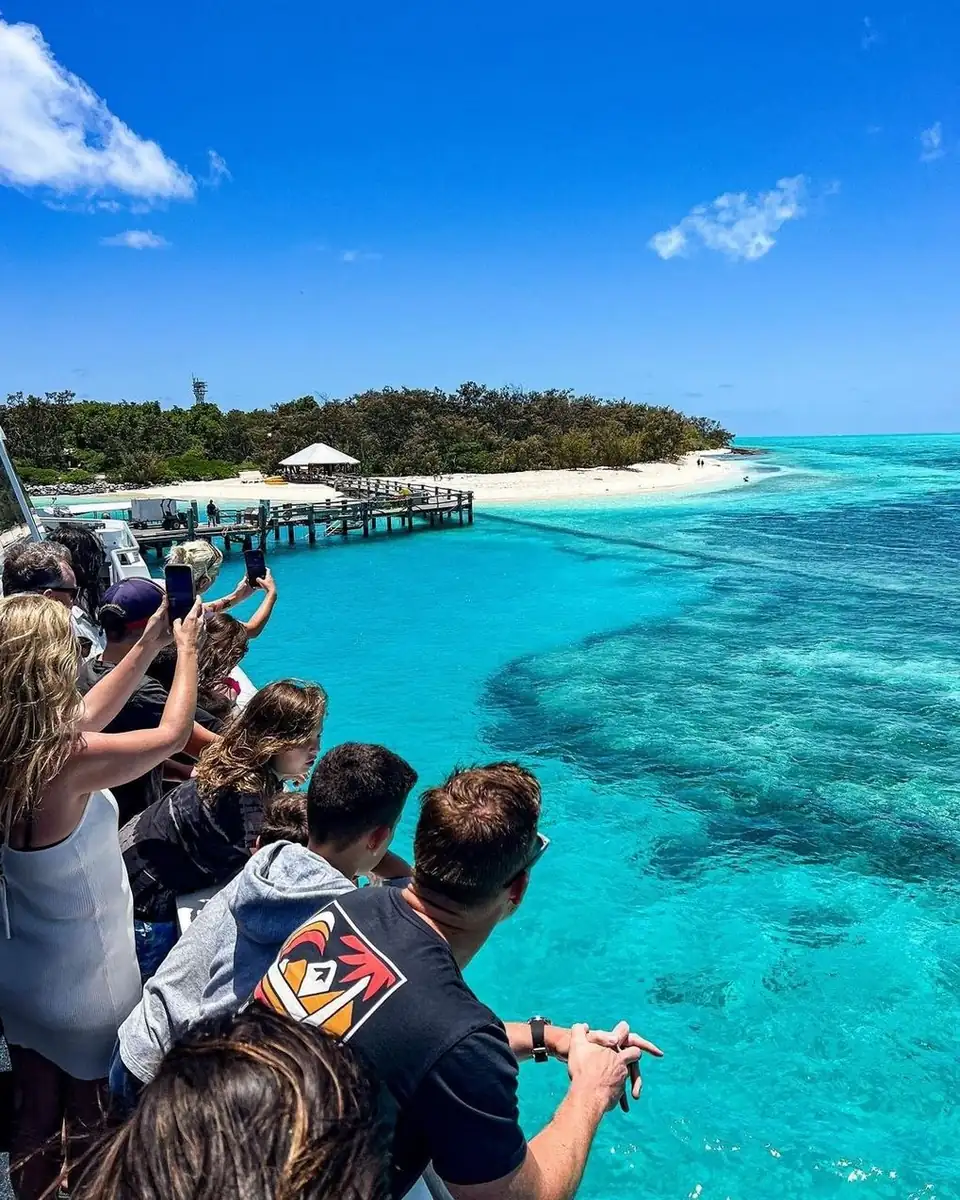
Is Heron Island Worth It In 2026? Then here’s the straight-up answer: Yes – if you’re after reef immersion, wildlife encounters that really get your heart racing and serious time spent in the water. But No if you’re expecting some high-end luxury, designer finishes and poolside cocktails coming at you non-stop. This place sits on the southern end of the Great Barrier Reef, and the reef is the real headliner. Everything else is second to that.
I’m Paul, by the way – I’ve been showing off Australia to travellers for decades, and I’ve seen every sort of island marketing you can think of. Heron Island ain’t Hamilton – it’s not the glossy Whitsundays either. It’s a coral cay with birds overhead, sea turtles lazing on the sand and reef sharks cruising just metres offshore. If that gets you pretty pumped up about more than just the spa menu, then carry on reading.
Trading Shoes for Flip Flops On A Southern Reef Coral Cay
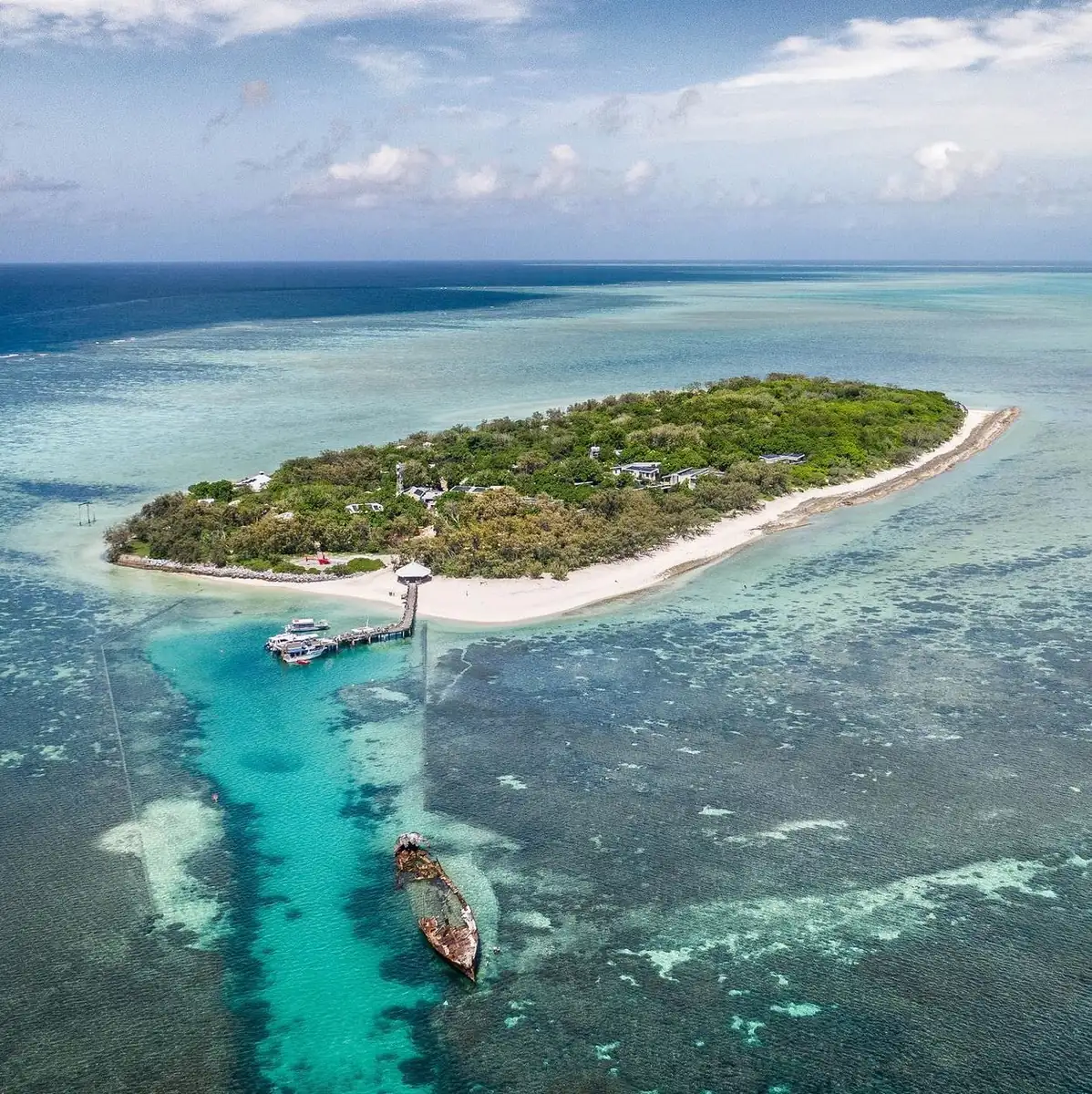
You don’t just “check in” here; you wade through shallow water from Gladstone or land on a stumpy sand airstrip surrounded by coral flats. Five minutes later, your shoes are full of crushed coral, and you’re staring out at water so clear it looks almost like a postcard.
Heron Island is a cheeky 80km from Gladstone down on the southern edge of the Great Barrier Reef. The reef system stretches well over 2,300km along the Queensland coastline and takes up a whopping 344,400 square km of ocean. That scale explains why the wildlife feels so densely packed and on the move.
The island itself is tiny – 800 metres by 300 metres max. Take a quick 20-minute stroll, and you’ve walked around the whole thing. Underwater, though, the landscape opens right up.
What Your Dollar is Really Getting You In 2026
Let’s be clear here about what you’re paying for – you’re not getting ultra high-end hotel rooms. You’re getting a top spot, access and a lot of coral reef to play with.
The rooms are comfortable enough, but let’s not sell you on luxury – they’re simple as. Some of the categories rely solely on ceiling fans to keep you cool. And yes, it’s humid in the summer – way humid. Just ask anyone who’s been on a North Stradbroke Island day trip in January, then imagine it even more so with coral sand and a sea breeze blowing in off the ocean.
Indicative 2026 nightly pricing (always confirm current rates before booking):
| Room Type | Typical Range (AUD) | Air Con | Best For |
|---|---|---|---|
| Turtle Room | $500–$650 | No | Reef-focused couples |
| Reef Room | $650–$800 | No | Close beach access |
| Beachside Room | $750–$950 | Limited | Families |
| Suites | $950–$1,300 | Yes | Extra comfort |
What You Get for the Price:
- A front-row seat to Wistari Reef – and we mean that literally. You can wade right on in
- Easy shore snorkelling – just step out of your beachside accommodation, and you’re splashing around in no time
- Quality scuba diving trips, and we’re not just talking about any old dives. We’re talking about intimate groups and reef sites that feel more like a secret hideaway than a tourist hotspot
- The chance to see seasonal turtle nesting – but you have to be patient & keep in mind this is on nature’s schedule, not ours
- A genuine marine research presence on the island, which is pretty cool to see
What You Don’t Get:
- Marble bathrooms, or for that matter, anything fancy. This place is low-key
- High-speed Wi-Fi – although, to be honest, you won’t have any reason to be checking your email that often
- Endless à la carte dining – but who needs endless options when you’ve got the reef right on your doorstep
If you’re looking for a fancy resort experience with all the trimmings, there are plenty of other islands in Queensland that might tick that box for you. But if you’re after reef-first travel, this place delivers
The Water Experience Is The Real Reason You’re Here
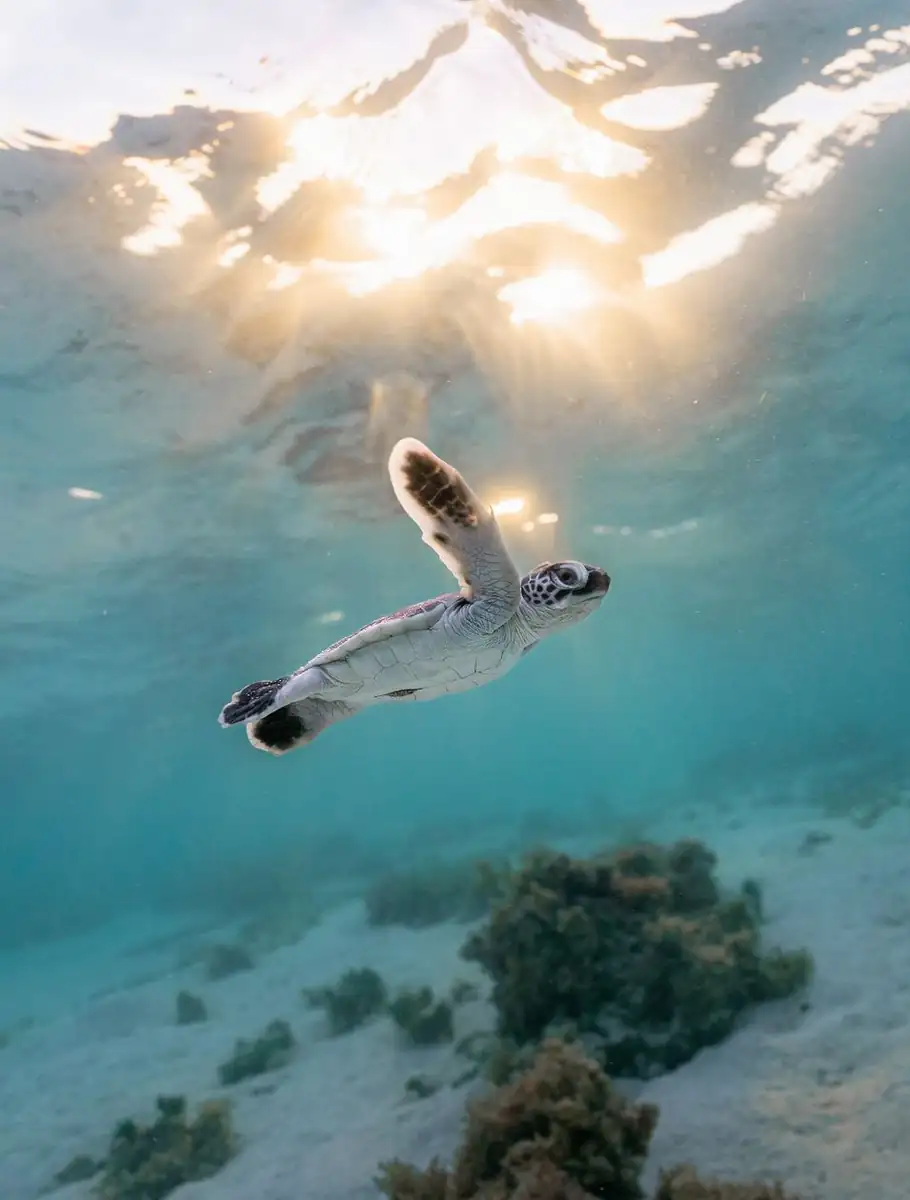
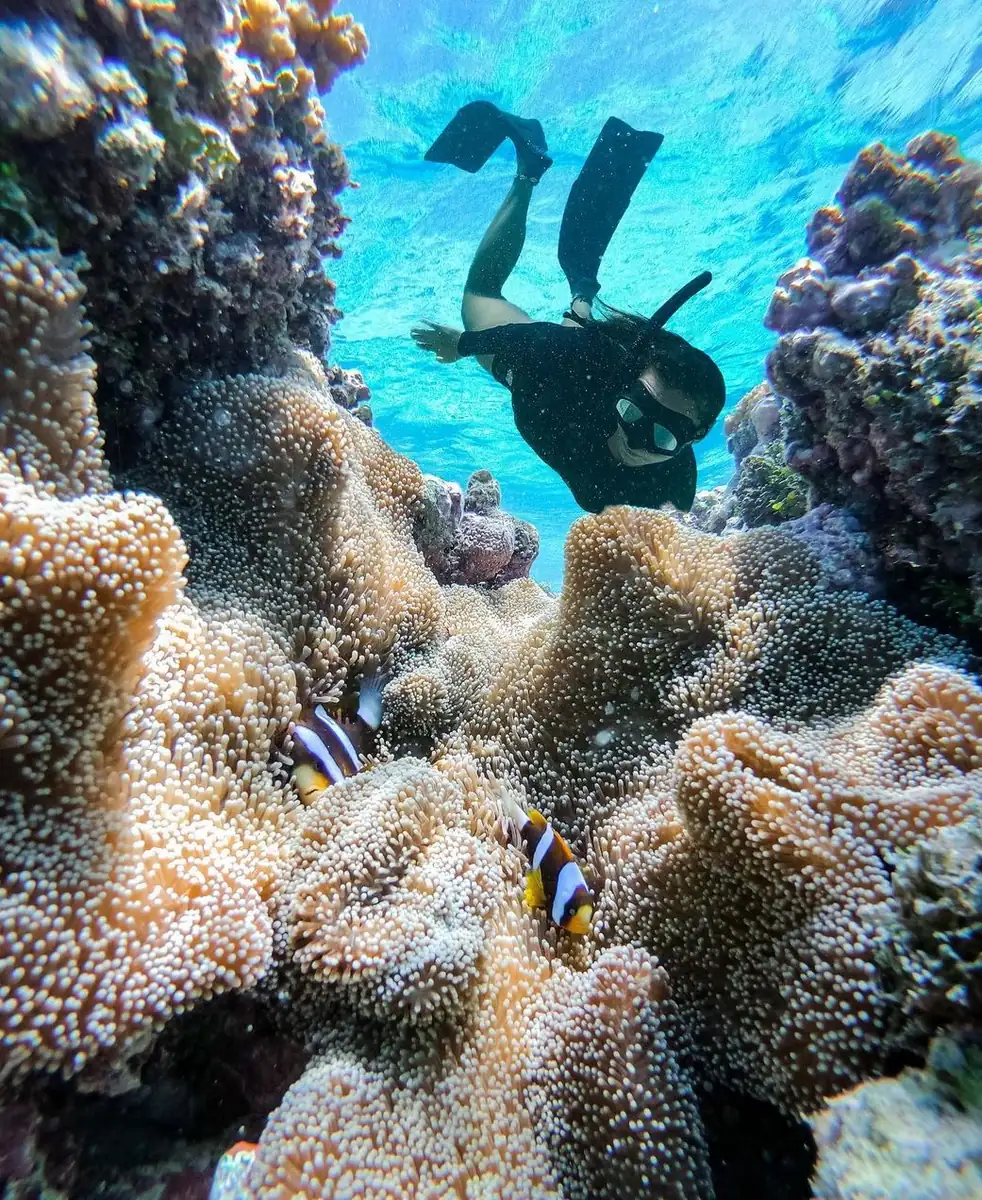
Wistari Reef is a real gem of a dive site – and I don’t just mean the coral. I mean the whole package. You can be snorkelling within a few fin strokes of the shore, surrounded by parrotfish chomping away, and giant clams that glow electric blue
And then there are the reef sharks. Yeah, you read that right. Reef sharks. But don’t go thinking you’ll be dodging them in the shallows all day – they move through with a quiet respect for the coral ecosystem
Wistari Reef itself is a real highlight for snorkellers and divers alike – with visibility that’s pretty close to perfect in the cooler months, and a coral structure that still supports a healthy mix of fish life.
A Bit of Context
Coral reefs aren’t just pretty to look at – they’re living, breathing ecosystems that are built by tiny coral polyp colonies over centuries. Each polyp secretes a layer of calcium carbonate, and before you know it, you’ve got a reef framework that supports a whole world of marine life.
So when you’re snorkelling here, you’re not just floating above some rocks – you’re hovering above a whole ecosystem that’s teeming with life.
Scuba Diving – A More Intimate Experience
Scuba diving at Heron Island is about more than just the reef itself – it’s about the experience. You’ll be diving in smaller groups, without the crowds that plague some of the northern reef sites. It’s a calmer, more relaxed experience – and one that feels a lot more like the real deal.
Turtle Encounters – On Nature’s Schedule
We’ve got turtle nesting from November to March, and hatchlings scrambling towards the water under the light of the moon later in the season. But here’s the thing – it’s not some staged wildlife show. You may see nothing, or you may see a whole lot. And you’ll definitely be doing it on nature’s schedule, not ours.
Our guided walks are pretty low-key – no flash photography, no crowds – just a genuine respect for the animals and their habitat.
Oh – and you might notice an Environmental Management Charge built into travel within the Great Barrier Reef Marine Park. Some people call it a reef tax, but it’s actually just a way of supporting the important work that goes into protecting our planet’s most amazing ecosystem.
Birdlife, The Pisonia Trees, and the Noise That Goes with Nature
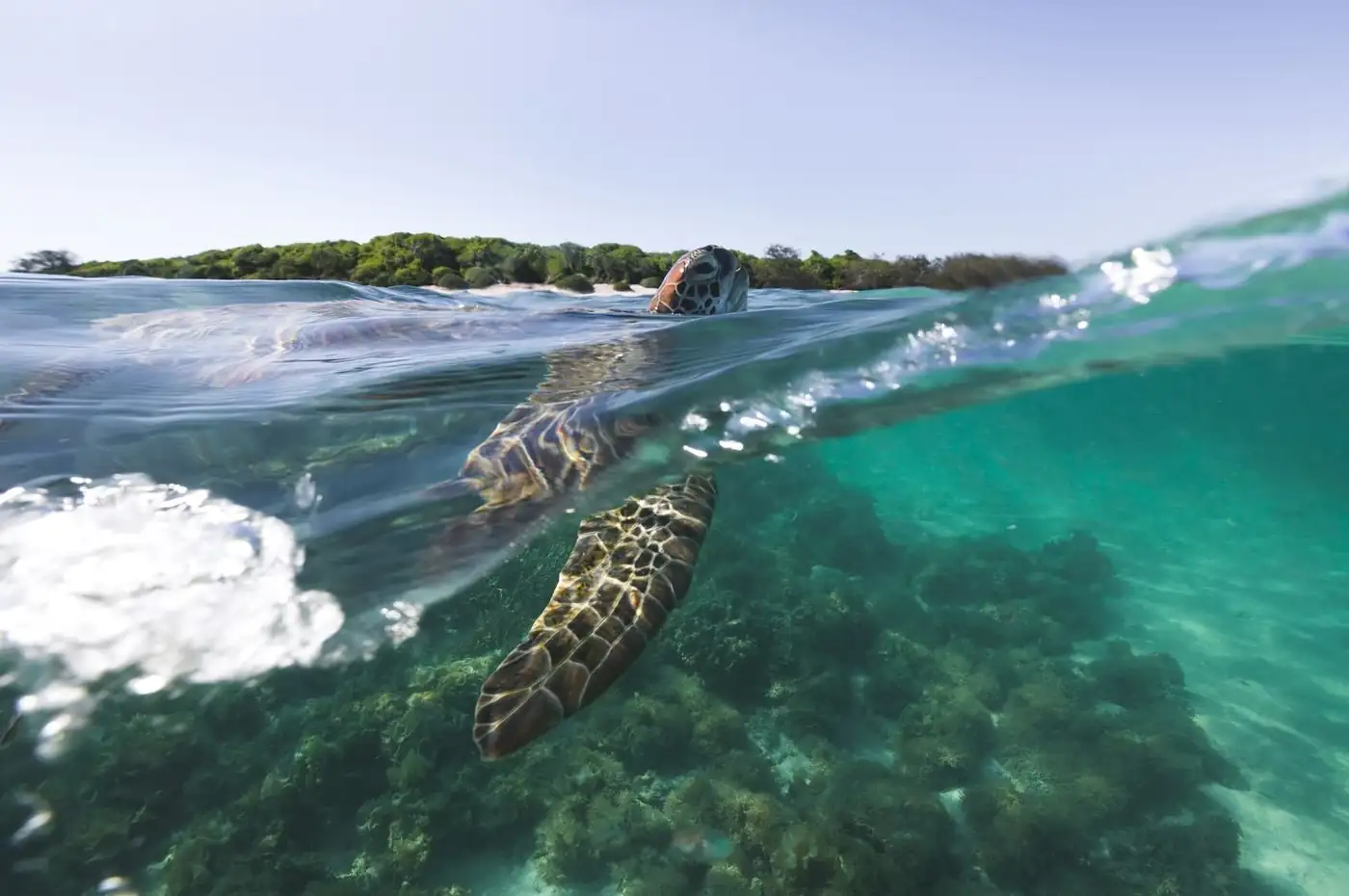
Heron Island is not just a place where the sea birds come to breed, it’s a major seabird nesting site
Wailing shearwaters and other seabirds call it home, at least for a few months of the year. During the peak season its not uncommon for the sounds of squawking and flapping to never actually let up. Sometimes you’ll even get a bird who cant quite manage a smooth landing and crashes down near the path right in front of you.
The pisonia trees in the island’s interior are a real hotspot for nesting birds. Their sticky seeds have a bit of a trick up their sleeve – they can grab onto feathers, and that creates a bit of a chaotic situation – and one that’s pretty fascinating to watch. But even here, it’s not like you’ll be treated to some peaceful silence.
If you liked the coastal wildlife vibe on that North Stradbroke Island Day Tour you did, you’ll love this place – just turned up a notch
Dining – Pretty Good, But Not Going to Blow Your Mind
The food on Heron Island has its fans and its detractors in the reviews.
Breakfast and dinner usually work as a buffet, with all the usual suspects: fresh salads, seafood, roast meats, and standard desserts. It’s ok, it’s reliable, it’s filling. But it’s not a gourmet experience by any stretch of the imagination.
One thing is for sure, though – the remote island location isn’t exactly cheap to run a kitchen from. Those salads and seafood won’t magically transport themselves there, after all. So logistics matter.
So here is my tip:
- Pre-book the meal packages so you don’t get caught out
- Try to adjust your expectations a bit – a bit of simple and solid food is all you are paying for
- Save your energy for the reef, and not for trying to figure out why the risotto is a bit underwhelming
- You are there for the water time, not the cooking experiments
Weather Patterns and What You Need to Know
Queensland has a pretty clear rhythm to the year
May to October (Dry Season):
- Lower humidity means less sweat
- Cooler evenings mean a nice rest after a long days snorkelling
- The views are some of the best you’ll ever have while snorkelling/diving – strong visibility and all that
November to April (Wet Season):
- Humidity goes up, which means it’s a bit more steamy
- There is a lot of turtle activity, which is a real treat to see
- Afternoon storms can pop up, so keep an eye out for those
- Marine stingers are a real issue during this time, so the island will have protective suits on hand
Cyclone season proper is from November to April. We don’t get too many direct hits, but they are possible, so it’s always a good idea to keep an eye on the forecasts before you head out.
The water temperature is pretty constant year-round, ranging from roughly 21 in the winter months to 27-28 in the summer, so you should be comfortable in the water, except perhaps in the coldest months, when a lightweight wetsuit can make a big difference.
Getting There Needs a Big Commitment From You

Options are:
- Boat transfer from Gladstone – that’s 2 hours at sea, so be prepared for choppy waters – and the boat can get pretty rough
- Or take a 30-minute flight in a smaller plane – but be aware that there’s a luggage limit on these, so pack light
If you’re one of those people who gets seasick, be sure to bring some motion sickness tablets along – the boat ride can be nasty on the stomach.
And don’t expect to be able to bring too much luggage on those flights – pack smart if you want to bring anything along.
Weather can also cause delays, so if you’ve got other plans after Heron, be sure to leave some buffer time in case the weather doesn’t cooperate.
Who Thrives Here — And Who Should Look Elsewhere
Heron’s a great fit for people who:
- Really, really want to get out on the reef
- Enjoy snorkelling or scuba diving (or both)
- Are keen on conservation and want to support eco-tourism
- Are fine with a bit of humidity and wildlife noise
- Are you looking for a pace that’s really relaxed
But if you’re looking for high-end resorts, reliable internet, a bit of nightlife – or if birds and natural mess really get on your nerves, then Heron might not be the best choice.
If you’re planning a trip to Queensland that’s got a bit of everything – like a North Stradbroke Island day tour and time on the southern reef – then Heron fits in pretty neatly. Just be aware that the experience is a bit different.
Operators like Great Barrier Reef Tours often sell Heron as a chance to really get up close and personal with the reef, which is basically what it is. And if you know what to expect – that it’s not the Ritz – then you’re going to be a lot happier.
Practical Tips For Preparing for Your Trip
Before you book:
- Make sure you’ve got a good handle on the transfer schedule
- Check the seasonal safety advice for the reef – you don’t want to get caught out by something you don’t know about
- Double-check the luggage limit on those flights
- If you’re a certified diver, be sure to pre-book any dive trips you want to do
When you pack:
- Don’t forget a hat, long sleeves and reef-safe sunscreen – the sun can get intense out on the reef
- Bring some motion sickness tablets – just in case
- Pack a refillable water bottle and some comfortable, lightweight gear
The vibe on Heron is super casual, so just keep it simple.
The Low Down On 2026
So, is it even worth it?
The answer is – yes, if living on a coral reef is at the top of your wish list.
You wake up just metres away from a living, breathing coral system. Snorkel above coral colonies, dive at Wistari Reef, watch turtles nest, and just sit there and listen to those shearwaters wailing away in the evening. And take a walk through this pisonia forest, which feels like something straight out of Jurassic times.
It’s not some fancy-schmancy resort. This is the real deal – authentic reef living.
People who get this whole thing leave feeling pretty chuffed. Those who were expecting marble lobbies and whatnot often leave feeling pretty let down.
When I’m helping people plan trips for this whole multi-stop Queensland thing, I always stress that they need to get what they’re looking for. If they’re pairing up a North Stradbroke Island Day Tour with some time out on the reef, I tell ’em to think about what each place is all about.
Heron Island is about getting up close and personal with the Great Barrier Reef – in all its raw, living, real-life form.
If that sounds like your cup of tea, then it’s worth every cent.
The Final Word From Me, Paul
Heron Island is all about substance over flash. It delivers reef immersion, wildlife encounters, and a real connection to the southern Great Barrier Reef.
Just don’t expect it to be the Ritz. Get your head around the heat, the birds, and all that other stuff. Spend your days in the water, and you’ll be right as rain.
Do that, and 2026 on Heron Island won’t feel like just another resort break. It’ll feel like you’ve just waltzed straight into one of the most amazing marine ecosystems on the planet.
FAQ
What’s the best time to visit without feeling like you’re melting?
May to October is usually pretty good – nice and cool, and the water is generally pretty clear for doing all that water stuff.
Is diving something for beginners?
Introductory dives are on offer, but you’ll get more out of it if you’ve already got some water confidence under your belt. Certified divers, on the other hand, get access to some deeper reef sites.
How does it compare to some of the other southern reef islands?
Well, it’s all about the reef access and the vibe. It’s a bit more relaxed than some of the busier ones.
Got an environmental charge to pay?
Yeah, there is a charge. It goes towards conservation efforts in the Great Barrier Reef Marine Park.
How long should you stay?
Three of four nights is usually enough to get a feel for snorkelling, diving, and all the guided walks, without having to rush around like a mad person.